Monday, July 12, 2010

Beach Baby, Beach Baby

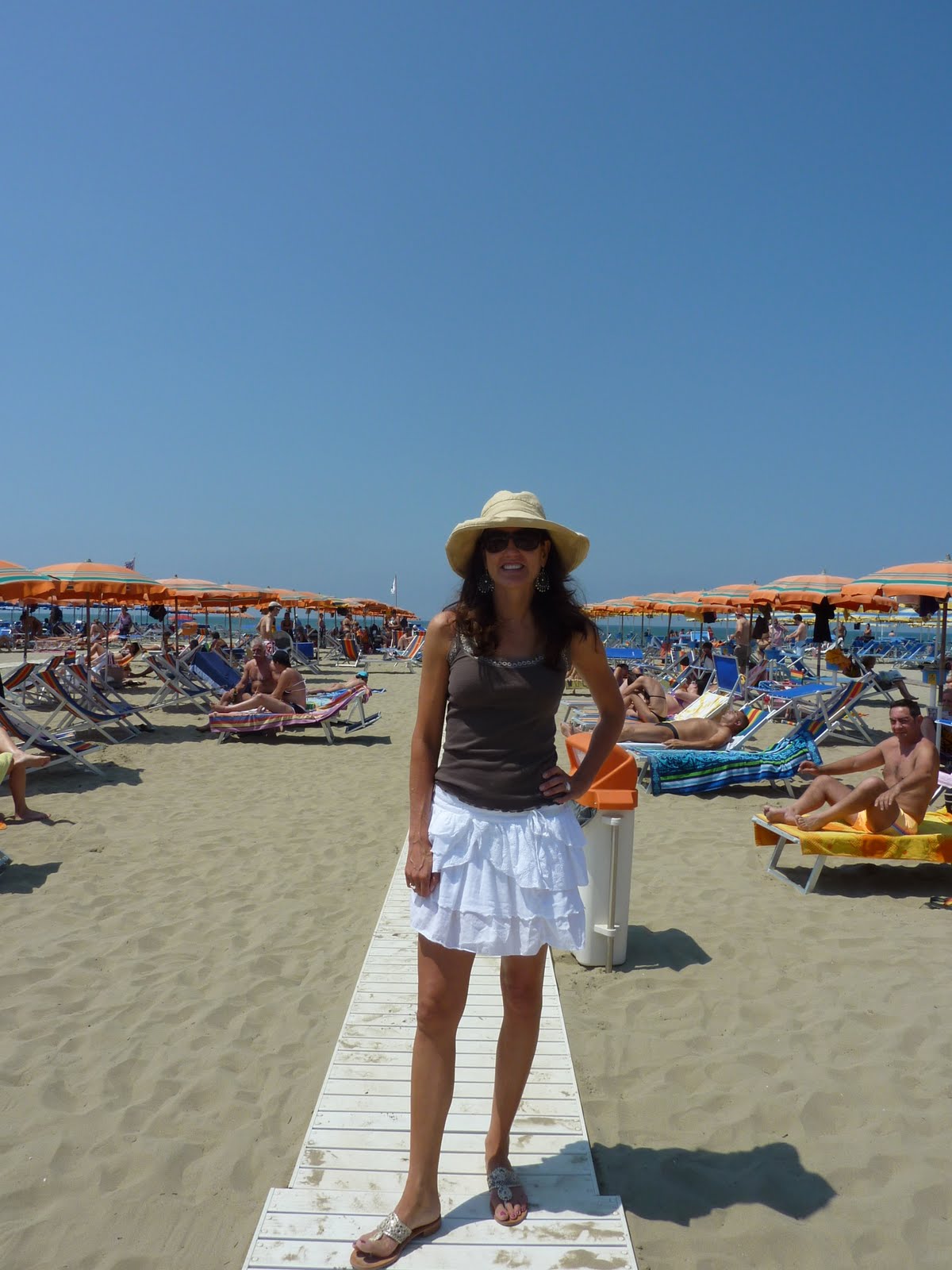
Summer arrived late in Tuscany this year after an unseasonably cool and rainy June. And when it finally arrived, it came with a vengeance. July has been roasting hot in Florence so far and the only real way for me to get some relief is to head to the countryside where I work selling the most beautiful farmhomes in all of Tuscany at Castello di Casole, or hit the beach. So in order to stay cool this summer I have made it my personal mission to frequent as many beaches as possible on my days off.  Here is a little introduction to two very different stretches of sand I recently discovered.


VIAREGGIO
One Saturday in early July Daniela and I decided to drive to Viareggio, a bustling urban beach town only an hour by car from Florence and an hour and a half by train. Viareggio is home of the famous carnival of Viareggio which dates back to 1873 with its paper-mache floats that parade along the Promenade of shops and cafes that parallels the shoreline in the weeks preceding Easter. It being a weekend I was expecting to encounter hoards of people but I was pleasantly surprised at how easy it was to find a parking space. The beach was certainly active and lots of people were walking along the water’s edge, but it was nothing compared to beach in Riccione on the Adriatic Sea which I will write about in another story…

What I really like about Viareggio, and what distinguishes it from its more upscale counterpart, Forte dei Marmi just fifteen kilometers up the coast, is the way the beach resorts or “bagnos” that line the beach are situated right behind the shops and cafes along the Promenade in the center of town.  Each bagno has its own sets of cabanas, rows of lounge chairs and brightly colored umbrellas, a little bar and a restaurant as well.
A day at a bagno in Viareggio costs anywhere from 15 to 30 euro, and you can pay by the day or month, or like many Italian families do, the whole summer. Some of the bagnos even have swimming pools. The key is to get chairs as close to the sea as possible where the breeze is the strongest. In order to do so, you need to arrive early or even call a bagno to reserve your space ahead of time. Food always being a priority for me and Daniela, we walked past bagno after bagno until our stomachs stopped us in front of a little café on the beach at Bagno Guido. 
After a light salad with tuna and mozzarella, we parked ourselves on two lounge chairs and relaxed in the sun all afternoon. Then we walked along the beach, which stretches for miles in either direction, to the next little resort town, Camaiore, and ventured down its long white pier that stretches out into the sea like the prow of a big ship.

Back at the bagno Daniela took a little nap while I did some yoga under the shade of our umbrella. At the end of the day we threw on our beach cover-ups and took a stroll along the Promenade. Noticing that the July sales were in full swing, we couldn't resist poking our heads into a few shops along the way. I found a great summer dress by one of my favorite Italian designers, Massimo Rebecchi  (you can never have enough dresses in Florence) and Daniela bought some blue Tom Ford sunglasses that she was particularly excited about and which happen to look fantastic on her.

Due to its proximity to Florence, its accessibility and its lively combination of beach, shops and cafes, Viareggio is an ideal place to spend a hot summer day, especially for families with kids. My advice is to scout out the bagnos right behind the shops in the city center for one that feels the most appealing and has the most desirable lounge chair/umbrella location. Those seeking a more luxurious beach experience might want to check out the new bagno “Teresita" which costs around 100-120 euro for the day.  

To get to Viareggio, take the A11 west to Lucca where there is an exit for Viareggio then head north on the toll road until you arrive at the exit for Viareggio. Drive into the center towards the beach and make a left turn at the T-stop. You will see several parking areas on your right as you approach the city center.

PARCO DELL'UCCELLINA

On another steamy summer day, my friend Paolo invited me to spend an afternoon with him at Parco dell’Uccellina, a national park that runs along a six kilometer stretch of the Maremma coast south of Grosetto. The drive to Parco dell’Uccellina from Florence is about two hours, maybe even two and a half, but it’s worth every minute. The polar opposite of Viareggio, the park is wild, rich with natural beauty and there is not a bagno in sight. The sand is fine, the sea is cool and inviting, and there are little huts made of driftwood scattered along the beach where you can find relief from the mid-day sun. 


Since it was Sunday, otherwise knows as the worst possible day of the week to go to any beach in Italy given the traffic and the crowds, we decided to arrive in the afternoon. 3PM was late enough that we only waited ten minutes in the queue to park the car in the lot adjacent to the beach. Once inside we stopped to fuel up at the park’s bar and restaurant. After sliding into a parking space just steps from the beach, we headed south for about 15 minutes to a surprisingly secluded spot.


According to Paolo, the land that comprises Parco dell'Uccellina was once malaria-infested marshland. Then under Mussolini’s “bonificare” system in the 1930s the marshes were filled in with dirt for agricultural purposes. Now there are farms and horse and cattle ranches all over the area. The cattle ranches are home to the famous “Vacca Maremmana,” the white cows which Paolo says taste even better than the Tuscan Chianina because the cows are outside all day walking around and eating the special grasses that grow by the sea.
I was fascinated to learn from Paolo that there are cowboys in the Maremma called “butteri” who in the olden days used to wear velvet jackets and black hats while tending the cattle and sheep. Legend has it that Buffalo Bill and his circus came to the Maremma in the 1800s and challenged the butteri to a rodeo and guess who won??? According to Wikipedia, there are only five or six large herds still tended by butteri in the park today, however the tradition of the butteri lives on outside the park in small demonstrations in the region's rural towns and in the Italian equivalent of rodeos.
Thoroughly enjoying our secluded spot on the beach, Paolo and I talked, (or rather he spoke in Italian and I pretended to understand), read our books and took occasional dips in the refreshingly cool sea until dusk. The last hour or so was the best hour of the day because we were the only ones left on the beach. As we left the park the sun was shining brightly while a gentle rain began to fall and when we looked out the window to savor that magical moment, here is the sight that greeted our disbelieving eyes. Talk about a grande finale...
Fortunately Paolo had made a dinner reservation at Da Remo, a very special restaurant in Rispescia just five minutes from Parco Uccellina, Da Remo is famous all over Italy and it is virtually impossible to get a table in July and August without making a reservation well in advance. Remo opened the restaurant 19 years ago and he serves only fresh fish from the Maremma coast at very reasonable prices. 


We started with a mixed seafood antipasti featuring five different fish and shellfish, then we shared a tender white fish called corvina cooked Maremma-stye in foil with tomatoes, parsley, clams, mussels and juniper berries from bushes in the sand dunes all along the coastline. The waiter, who spent a good ten minutes perfectly fileting our fish tableside, recommended an unusual and unusually good Maremma white wine made from the French Voignier grape. I ate every morsel on my plate and drank every drop in my glass and proceeded to pass out for most of car ride home. Thank god Paolo was driving…

Parco dell’Uccellina is one of Tuscany’s many hidden treasures. I would highly recommend spending a day, or even two, at the beach as long as you bring an umbrella or get there early enough to claim one of the driftwood huts. There are many reasonably-priced agriturismos (bed and breakfasts on working farms) in the area or you could experience one of the most luxurious hotels in all of Italy at Il Pelicano in Porto Ercole a bit further south down the coast.

To get to Parco dell’Uccellina, drive south on the Firenze-Siena highway and head in the direction of Grossetto when the highway ends after about sixty kilometers. Pass Grossetto and continue for about 20 kilometers to the Rispescia exit. Turn right and you will see signs for the parking area up ahead on the left. 

Wednesday, March 24, 2010

The Dolomites: A Skier's Paradise


When I was 17, my parents sent me off for a week of skiing in Chamonix, France, with a group from my high school in Connecticut. It was my first trip to Europe and it was a life-changing experience for me. My favorite part was the day we skied into Italy. Something deep inside of me really connected with the place in a way I had never experienced before. It felt like coming home, and I am sure it is a big part of the reason why I call Italy home today.  I have always wanted to relive that experience and finally last week the opportunity arose when my friend Marco invited me to join him for four days in the Dolomites.

The drive from Florence to the vast, stunning mountain range comprising the Dolomites, a UNESCO World-Heritage site in the Alps that forms a border between Italy, Austrian and Germany, normally takes about five hours. However, Marco, being a bit of a lead foot, made it to the Val Gardena, which he says has the best skiing in all of Europe, in just over four hours. He had booked an all-inclusive, three-night stay at Hotel Diamant, a lovely little lodge with an impressive wellness area between the charming alpine towns of Ortisei and Santa Cristina.

After we checked into our room with a balcony framing a postcard-perfect rock formation called Sassolunga, we drove a few kilometers to Ortisei where we rented skis and poles at Carlo’s ski shop. Back at the hotel, we immediately changed into our bathing suits and spent the next few hours soaking in the indoor and outdoor whirlpools, steaming in the Turkish Baths (one scented with a soothing blend of eucalyptus and other herbs), and drying off the warm, hot and infrared saunas.


Dinners were included in our hotel package and our meal that night featured a buffet of local cuisine with a wide variety of pork dishes and beef tongue which Marco heartily devoured while I tried not to watch. I opted for the dumplings, a heaping pile of potatoes and the salad bar and we enjoyed a bottle of fruity, light Muller Thurgau from Bolzano, a large town we drove through in the foothills of the Dolomites in the Alto Adige region. Northern Italy, and specifically the Alto Adige, is famous for its white wines and I was particularly excited to sample a few different varietals on this trip.


The next morning the mountains were blanketed in a layer of fog and it was snowing pretty hard so we took our time at the substantial breakfast buffet. Eventually we boarded the hotel shuttle and headed to the gondola in Santa Cristina. As we ascended the mountain, I became increasingly nervous about the lack of visibility and my lack of familiarity with this ski area. Fortunately, Marco, who is an excellent skier, proved to be a very patient and supportive guide. We were enveloped in a shroud of fog and I couldn’t see more than four feet in front of me most of the time, but we did hit a few clear patches with fresh, untouched snow.  Lunch for me and my tired, tense legs came none too soon. We dined at a little chalet on the mountain and I ate another bowl of dumplings as we watched the snow fall out the picture window. Eventually a group of large, boisterous German men drinking massive beers descended on our table so we ventured back out into the fog and blindly worked our way down the mountain. Needless to say, we were relaxing in the whirlpool within minutes of arriving back at the hotel.


The following day we awakened to periwinkle blue skies, warm sunshine and a magnificent view out of our hotel room window. Finally I was able to see the incredible stretch of wild beauty all around me that I had only been able to imagine the day before. The Dolomites are truly awe-inspiring. (According to Wikipedia, the term “dolomite” was coined by a French mineralogist in the 19th century and is a kind of carbonate rock that causes the striking formations and colors of these mountains). 


The Val Gardena area of the Dolomites is huge and I was wide-eyed and speechless as we rode the bus ascended the gondola that morning. Thankfully Marco knows this area well and the snow was hard-packed and very fast so we were able to cover a lot of ground which included passing through an adorable alpine village called Selva. 

We stopped for a hearty lunch of polenta and fontina cheese at the same chalet we dined at the day before, but this time we were able to sit outside, catch some rays and take in the views.
We continued skiing until our legs gave out then headed back to the hotel for a final round of relaxation in the warm waters. 

I have to admit that I was feeling a little melancholy at dinner that night knowing that we would be leaving this beautiful, romantic alpine paradise the next morning. So over glasses of limoncello and grappa we plotted out our next Dolomites adventure, this time in Corvara, Marco’s  favorite town in the Val Gardena, with a side trip to Cortina to check out the legendary après- ski scene.


The weather had turned for the worse the next morning so we opted to go for a walk around Ortisei before driving back to Florence. Painted in pastels and nestled in a valley with the majestic mountains rising above it, Ortisei is a charming village with some nice shops and a few interesting churches. The highlight is the Adler Spa & Resort, which has one of the best-rated spas in the Alps and the “largest and most impressive water world in the Dolomites.” I highly recommend this little gem to those who prefer a more a luxurious, indulgent mountain experience. I, myself, look forward to staying there during a future ski trip to the Dolomites, of which I now know there will be many.

Monday, February 15, 2010

Lunch at Jennifer's: Lesson One - Raw Artichokes


Right now I am sitting in my apartment on a mild winter afternoon enjoying one of my favorite Tuscan winter lunches of all time- a salad of raw carciofi (artichokes) and a heaping pile of white cannellini beans drenched in a delightfully fragrant olive oil a friend gave me- freshly pressed with olives from his family’s estate. (We love friends having friends like this.)

Until I moved to Florence I had never eaten an artichoke that hadn’t been steamed or boiled for at least 45 minutes so I was a little skeptical the first time I tried this salad. In fact, I was pretty sure I would be chewing for the better part of the day, but I was pleasantly surprised at how tender the artichoke slices were and it didn’t take long for me to help myself to seconds.


There are a few secrets to making a really good carciofi salad, one that even Italians will compliment you on. First, you need to find the small purple artichokes from Italy called Morello or Morellino, which a specialty shop like Whole Foods might carry. Next you have to peel off all of the tough outer leaves. Slice off the prickly tops and the stems and cut the chokes in half.

Then- this is the key part- thinly slice the chokes vertically so that a piece of the heart is on the bottom every slice holding the leaves together. Toss the slices in a bowl with some finely chopped Italian parsley, fresh lemon juice and sea salt, and serve with shavings of a nicely aged Parmesean Reggiano.

As for the cannellini beans, soak a cup or two in a big bowl of water overnight. Rinse and put in a large pot with about 2 inches of over the top of the beans. Add a few sprigs of rosemary and bring the beans to a very low boil. Then turn the heat down as low as it will go and simmer the beans until tender, probably 30-45 minutes, making sure not to allow the skins to break. I put a cover on the pot and leave a little crack for the steam to get out so they don’t stand a chance of coming to another boil.

I always like to end my lunches in wintertime with a cup of chamomile tea and a few clementines from Sicily. I picked these up this morning at the open-air martket at Piazza Sant' Ambrogio. Aren't they pretty?

Thursday, February 11, 2010

Sundays with Daniela


My friend Daniela and I have gotten into this really fun routine on those Sundays when I am not working at Castello di Casole… I pick her up at around 9AM and we go to our health club for a workout and a steam in the Turkish bath. Afterwards we head out, on foot or by car, to a place I have never been, and walk around for awhile until our stomachs start rumbling. Then we find a restaurant she has heard about or has personally experienced and knows we will love. We wait for just the right table, order a glass (or when we’re in a particularly festive mood a bottle) of vino, and introduce ourselves to our waiter who, over the course of the next 2-3 hours, inevitably becomes our friend. Then we open our menus like kids on Christmas morning. I always do a quick scan for fish and chicken dishes before conducting a more thorough search of the day’s selection. Though it is irksome to Daniela at times that I don’t eat red meat, she can’t eat wheat and only occasionally indulges in cheese so it sort of evens out.

A few Sundays ago we had planned to take a road trip, but that particularly morning the sky was cobalt blue and the air was pure and crisp (“sano” as Daniela calls is). Florence was bathed in a dazzling golden light and it seemed like a perfect day to be outside. So we decided to walk from my apartment through the San Niccolo neighborhood up to Piazza Michelangelo to take in the views then head back downhill into Oltrarno  (the other side of the Arno) for lunch.


I have been to Piazza Michelangelo a number of times, and each time I reach the summit and turn to face that sea of Renaissance treasures stretching out below me, it takes my breath away. A visit to the piazza is not complete without continuing up the road to the church of San Miniato which is still a functioning Dominican monastery. My favorite spot is the little chapel, built by the Medicis in honor of Jacopo of Portugal who died when he was only 26, with its plush ceiling of blue and white glazed terra cotta panels by Lucca della Robbia.


We had worked up quite an appetite by the time we descended into Oltrarno. We were hoping to get to Olio & Convivium before the lunch crowd arrived only to discover that it was closed. Luckily for us Daniela remembered an enoteca further down Via Santo Spirito called il Santino. When we opened the glass door and entered the warm, cozy room with a tiny bar and only four tables, I knew right away that this is a place I will return to many times in my life. All four tables were full so we stood at the bar and ordered a glass of vino rosso while Filippo, the “oste” as he is called here, prepared a small plate of Pecorino cheeses with a peppery jam. Next up was an order of baccala, a traditional Tuscan salt cod, in this case served as a creamy spread on slices of toasted bread drizzled with fresh olive oil.

Warming on a shelf below the bar were four steaming pots of various soups and stews. We both ordered the white root vegetable puree to start and I followed mine with a savory fish stew while Daniela opted for the polpette, tender small meatballs in a light tomato broth. Well into our second glasses of vino rosso we struck up a conversation with Filippo and a firefighter from Rome sitting next to us at the bar. Before we knew it another hour had passed and, as usual, we closed the place down.

Last Sunday Daniela told me she wanted to take me to a very “special place” in Cortona which she had been talking about for weeks. I was filled with anticipation as we drove an hour or so down the A1 through Arezzo. When we arrived in Cortona we were completely famished so, before heading to the “special place,” we went straight to Osteria del Teatro, an all-time favorite of Daniela’s tucked into a side street near the famous Teatro Signorelli. Seated at a corner table surrounded by cheerful yellow walls adorned with black and white photos of various theatre performances , we settled into a bottle of Achelo, a full-bodied Syrah from Cortona that cost a mere 12 euro.

Lunch for me was a trio of hearty Tuscan soups served in little terra cotta crock pots - pappa al pomodoro (bread and tomatoes), ribolitta (minestrone with bread) and mushroom and farro (a winter wheat-like grain), all served with more bread. Daniela ordered the Scrigno di Chianina- the famous Tuscan Chianina beef cooked in a glass jar in the oven at a very low temperature. As she savored each bite, she kept telling me, as she often does, how much I was missing by not eating red meat. “One of these days,” I assured her. “Piano, piano.” (Slowly, slowly).

Osteria del Teatro is known for its chocolate, so in preparation for dessert we went easy on the second course, ordering a medley of winter vegetables and white beans. When our waiter, Ferruccio, brought out a thick butcher block cutting board with several slabs of velvety light and dark confections, one dotted with nocciola (hazlenuts), I knew I was doomed. It took a good half-hour for us to polish off all of the mouth-watering shavings, some with hints of fruit, cinnamon, and even pepper. We were, once again, the last to leave, but before we said our goodbyes, Daniela made another lunch reservation for us on February 22nd, when Cortona honors Santa Margherita, its patron saint, with a big celebration. (I haven't told her this yet, but this time, if I get my courage up, I might just try a bite of beef or maybe even veal which seems to be the specialty of the house).

Our appetites satiated we were now ready to visit the “special place” Daniela had promised to take me to. As we wound our way down the hill from Cortona she suddenly turned right onto a long, hidden drive through fertile woods that follows the footsteps of St. Francis to Convento delle Celle, a 13th-century monastery believed to be founded by the saint in 1211.

What a gem this place is. Nicknamed “Cappuccini” after the brown robes with hoods worn by Franciscan monks who still live and worship there, the hermitage was built in a gorge carved by a stream that during the wintertime becomes a raging waterfall. After walking around the grounds, we sat and quieted our minds for awhile in the original cell of St. Francis where he made his home in 1226.


There is so much wonderfully soothing energy pulsating through this place, that had we not consumed an entire bottle of red wine and more chocolate than either one of us has eaten in the past year, we might have lingered. But it was getting dark and before heading back to Florence Daniela wanted to show me her home in the countryside near Arezzo which she owned in her 20s. As we walked away from the monastery I glanced to my right and was treated to this magical sight. It's no wonder St. Francis was drawn to this sacred place.


This coming Sunday I am trying to talk Daniela into going to Viareggio, a beach town an hour and a half by train from Florence, to see their Carnivale parade which is supposed to have the most incredible floats. If I stand any chance of success in getting her to join me I will need to find a really incredible restaurant so if you have any recommendations, please send them my way.


Monday, September 7, 2009

Carefree on Capri

Back in July I got a call from my friend Hana whom I had befriended while we were both living in Aspen and who now works for Hewlett Packard and leads a very exciting life in London. Hana and I reconnected earlier this summer and quickly determined that it would be great fun to do some traveling together. We zeroed in on a long weekend in late August and started preparing a list of all the places we would like to see, including Sardinia, Greece and Croatia.

Then one day Hana sought the advice of a friend of hers, a well-traveled restaurant critic in London, who told her “Sardinia??? Oh no, you HAVE to go to Capri.” He made a list of where to stay, how to get there, what private beach clubs to go to, restaurants for lunch and dinner and where to people watch over aperitivos.
Capri has always topped my list of places to visit in Italy. It seems that everyone I meet at Castello di Casole has been there and has raved about how glamorous and visually stunning the island is. They have also told me how expensive and insanely crowded it is during the summers. Sharing the costs with a friend and visiting during the very last weekend in August seemed to solve both of those problems, so the decision was made and we booked a room for three nights at the Hotel Capri.

A month later, we met in Florence and caught an early morning, three-hour high-speed train to Naples. A forty-five minute ferry ride later, we arrived at the island I had fantasized about for so many years. The minute I laid eyes on Capri I understood why it has been a destination for the rich and famous for over 2500 years. It is much bigger than I had thought, and even more beautiful than I had imagined. It is almost frightening how steeply its jagged limestone surface colored green with woods and vegetation majestically rises out of the sea. The harbors and coves are dotted with yachts of varying sizes and shapes, some moored there for the entire summer.

We decided to get our bearings in the town of Capri while waiting for our luggage to arrive and realized within seconds of walking out of the hotel that Capri town is the LAST place in the world any sane person would want to be at that time of day. In July and August, hoards of tourists from the cruise liners and ferries pile into the funicular and buses up to the town and converge into a suffocating mob.

We high-tailed it back to the hotel, grabbed our beach bags and took the bus down to Marina Piccola where we discovered a delightful private club called Lo Scoglio della Serene, a smattering of lounge chairs and umbrellas tucked into little nooks and crannies on the flat rocks. We parked ourselves on two chaises and spent the next few hours relaxing in the sun and cooling off with occasional dips in the clear deep blue water. Emperor Augustus had it right when he named this place “Apragopolis” – “the land of sweet idleness.” I couldn’t even muster the energy to open my book.

On the way back to the hotel, we each bought a frilly white linen sundress then showered up and headed out for our first night on the town. Hana’s restaurant critic friend insisted that we have an aperitivo on the terrace at Quisisana, a world-renowned five-star hotel with the best people watching on Capri. The town was much more pleasant during the evening and we could finally see the storefronts of the designer shops lining the narrow, winding lanes. The terrace was packed when we got there but the head waiter Luigi quickly whisked us to a table perfectly situated for people-watching. I ordered the “Princess” - champagne with baby strawberries- and Hana had a "Rude Cosmopolitan" made with tequila, and for several hours we sat there gazing at all of the gorgeous men with scantily-clad supermodels on their arms stroll by. For those few hours we felt like princesses.

The next morning we took a bus up to the little town of Anacapri to buy some gifts and check out Villa St. Michele. This splendid residence was built by a Swedish doctor named Axel Munthe in the late 1890s on the site of the ruins of the St. Michael chapel built around 1000 AD. Several rooms in the villa have been preserved in their original condition and the residence is filled with Roman fragments and other valuable works of art. The Loggia of Sculptures with its marble bust of Tiberius is the biggest attraction but my favorite is the sphinx precariously perched on a ledge overlooking the most incredible views of the sea below.

I neglected to mention that immediately upon landing on the island the day before, Hana had informed me that Capri was famous for its custom-made leather sandals. Being a 5’10” shoe freak, I couldn’t help but notice the vast selection of beautiful, FLAT bejeweled sandals in window after window of the shops lining the streets of Capri town. There was simply no way I was leaving the island without a pair of my own.
So on our way to a private beach club called Fontellina, I stopped in the shop with what I thought were the most attractive sandals and ordered a pair with gold straps and large glistening cut glass stones. The shoes would be made that day with the final fitting at 7PM – just in time for drinks at Quisisana later that evening.
We arrived at Fontellina by descending a long and steep footpath with very slippery stone steps. (Rubber flips are highly recommended!) We set up shop on white, canvas-covered, thick foam mats spread out over a concrete slab that somehow managed to feel both elegant and comfortable. Later that afternoon we sauntered up to the pergola-covered restaurant for lunch in our beach cover-ups and ordered a pitcher of white sangria loaded with mangoes, oranges, lemons and mint at the recommendation of three attractive Italian men with whom I had engaged in a lively discussion during an earlier, rather lengthy dip in the sea. Hana ordered the Linguini Fontellina with crustaceans and I had a grilled whitefish called “dorato” with olive oil and lemon. We enjoyed the breeze and the incredible views until every last drip of sangria and every
morsel of food was gone.

That evening we donned our favorite summer dresses and headed straight to the shoe shop to pick up my sandals. Fortunately they fit perfectly and I kept glancing down at them lovingly throughout the evening. We decided that rather than hoover down all of the olives, crackers and peanuts served with our Princesses at Quisisana, where Tina Turner was sitting just a few tables away, we would have a nice dinner at one of the restaurants with outdoor tables lining the street further down from the designer shops. Sophisticated “edodē” had the most interesting menu, plus the waiters were really nice. We sat in our own candlelit booth and ordered two appetizers- a fresh ricotta salad and a raw crostini platter which included the freshest tuna tartare on a bed of raw potatoes, a tender red shrimp from Sicily, and thinly sliced sea brine. This time we opted for a bottle of Toscos- a light and fruity pinot bianco from Friuli.

The third day was definitely the highlight of the trip. We took the funicular down to Marina Grande where our own private boat manned by 19-year old Captain Roberto was waiting for us. For several hours we puttered around the island, swam through the famous White Grotto and admired the breathtaking beauty all around us. Then Roberto motored us over to the Amalfi Coast to a little harbor called Nerano and we walked off the boat and up the dock to a fabulous open-air restaurant called Lo Scoglio.
Hana’s friend the restaurant critic knew what he was talking about when he recommended Lo Scoglio. The Caprese salad had mozzarella so fresh it must have come right out of the cow. We ordered marinated anchovies and the local fish called “pezzogna” which the waiter recommended we have baked rather than grilled, a side of fried courchettes (zucchini blossoms) and a bottle of the Antinori Cevaro della Sala I had first tasted at Badia di Passignano in Chianti a few weeks prior. I experienced mild heart palpitations when the bill arrived but this lunch really was worth every penny.

Later that evening we reminisced about our long, taxing day at sea over glasses of Rosé in the main Piazza which was considerably less crowded because it was Sunday. We ordered salads at a little trattoria and tumbled into bed. On our last day, we had to catch a ferry in the afternoon so we took a final spin around Anacapri and then fueled up for the train ride back to Florence with a light lunch at a corner table overlooking the sea at Ciro a Mare in Marina Piccola.


My first experience on Capri far exceeded my expectations. Simply, put, it was blissful, and it was so fun to share it with a good friend. I can’t wait to go back again next year, this time in June or September when it’s not so crowded. Maybe I’ll even check out the impressive ruins of Villa Jovis (Villa of Jupiter). Built for Emperor Tiberius of Rome during the 1st-century BC, this massive 59,000 square-foot villa is situated near the famous “Tiberius’ Leap” where, according to local legend, disobedient servants and undesired guests were hurled over the cliff by order of the Emperor. Hmmm. On second thought, maybe I’ll just opt for a little more “sweet idleness” ….

Sunday, August 23, 2009

An Antinori Affair to Remember


It is a rare Saturday during the height of our busy season at Castello di Casole that I wake up feeling caught enough up on work to spend the day exploring. Thankfully yesterday was one of those Saturdays. As I contemplated my options over a steaming cup of Chai tea, I recalled hearing some clients rave about a special place in Tavarnelle owned by the Antinori family where they were able to order Tignanello and other phenomenal Italian wines by the glass. Tavarnelle is only about 30 minutes from Castello di Casole, so I threw on a sundress, grabbed my handbag and hat, and headed out on a long overdue adventure.

Normally I do everything in my power to avoid having to use my GPS system. I have seen GPS devices almost destroy marriages in this country and I have had my own share of annoying experiences. One day I was driving home on the superhighway from Assisi, when suddenly the woman on my Garmin GPS shouted out “Drive 100 meters and take an immediate U-turn!” Right. I ripped the machine out of the cigarette lighter and almost threw it out the window.

Fortunately I still had the GPS because when I got to Tavarnelle, which is in Chianti, I realized I had no idea where I was going. After driving around aimlessly trying to find signs for Badia di Passignano, I almost gave up and turned around. I had no choice but to turn to the GPS and within ten minutes I was parking the car in this delightful hidden hamlet.

According to the website, there are claims that the monastery of Passignano was completed as early as 395, though the monastery archives date back to the year 891. In 1049 Badia passed into the order of a reformed branch of the Benedictines who specialized in winegrowing and forestry. Over time the order became so powerful that it owned a quarter of Tuscany. Then in 1255 the abbey was attacked, burned and razed to the ground by the Florentines. Big surprise. In the 1500s the abbey was an important center for theological, literary and scientific studies. About 100 monks lived there, and it is reported that Galileo taught mathematics there from 1587-1588. Unfortunately the monastic life was suspended and many monastery treasures were lost in 1810 under Napoleon. Another big surprise.

Antinori purchased the vineyards around Badia in 1987. The abbey is still owned by the monks, although Antinori has the use of the cellars. The abbey was closed when I arrived so I strolled around the grounds and took some photos. Then I decided to seek out Osteria di Passignano, the restaurant and enoteca that Allegra Antinori opened in the late 1990s which sells all of the Antinori wines, plus fine wines from all over Italy.

I didn’t really know what I was doing when I poked my head into the enoteca, so I introduced myself as a real estate agent for Castello di Casole and asked if I could taste a few wines. Within minutes, the manager Marcello was guiding me to an ornately set, white-clothed table. As I took in the beautiful restaurant surrounding me, I knew I was in for a treat. Maurizio, the master sommelier, poured me a glass of sparkling wine and I started to peruse the menu and the hefty leather-bound wine list.

I could have gone for the €60 five-course Tasting Menu or the €100 Tasting Menu accompanied by a glass of wine for each course, but I wasn’t that hungry so I opted for the Mollusk and Sea Water Risotto with Basil and Cherry Tomato Pesto. The waiter started me off with an amuse bouche of octopus soup, its salty, savory broth soaking a paper-thin wafer.


He also brought me a little silver platter of beautifully presented homemade crackers, sesame seed breadsticks, focaccia and breads, a refreshing departure from the saltless, flavorless, often slightly stale bread served in most restaurants in Tuscany.

I literally gasped when the waiter presented me with my risotto surrounded by tiny tender mollusks and drips of dark green pesto. Risotto is one of my favorite dishes and I have ordered it in restaurants at least fifty times in my life. I can honestly say that this is the best risotto I have ever tasted. Nestled in the rice, which was cooked to perfection and lightly seasoned with herbs and cheese, were poached cherry tomatoes that melted in my mouth. With each morsel I took a sip of the 2007 Cervaro delle Sala “Antinori” Maurizio had chosen for me, a creamy blend of Chardonnay and Grecchetto (a white grape from Umbria) with a hint of walnuts which Maurizio informed me was rated by Wine Spectator as one of the finest white wines in all of Italy.

I would have been quite happy to call it quits after the risotto. But the next thing I knew, the waiter brought out a silver basket of homemade biscotti and cookies, and a ceramic ladle cradling three homemade dark and white chocolate truffles, one sprouting a trio of dried sage leaves. I ordered an espresso and opened the massive wine list.

For several years Maurizio has been building this list which is now up to 365 labels including sich greats as Solaia, Gaja, Sassicaia, Ornellaia, the best Brunellos and French Bordeaux, and Stag’s Leap in Napa and Col Solade in Washington State (both of which Antinori is part owner with Chateau St. Michelle). The selection is enough to make a wine connoisseur weep. After noting the €500 for a bottle of ’06 Ornellaia Masseto, I was pleased to hear that Maurizio’s focus now is to bring in more wines in the €20-€50 price range.
As I relucantly got up from the table and said my thank yous to Marcello, Maurizio and the incredible waitstaff, I was reminded that there are times in life when it pays to have no expectations. My lunch at Badia di Passignano on a random summer Saturday was an experience I will never forget.

Next time I will be taking a tour of the cellars with Maurizio which normally occur Monday – Saturday at 3:30PM and require a reservation. If you are planning a trip to Tuscany and you love food and wine, lunch or dinner at Osteria di Passignano should be on your itinerary somewhere, somehow. Call Marcello at +39 055 8071278 and let him know I sent you.